Perimenopause & Menopause: The Plot Twist Nobody Warned Us About
Hot flashes, mood swings, sleepless nights, and a body that suddenly seems to have a mind of its own - welcome to the chapter nobody prepared us for.
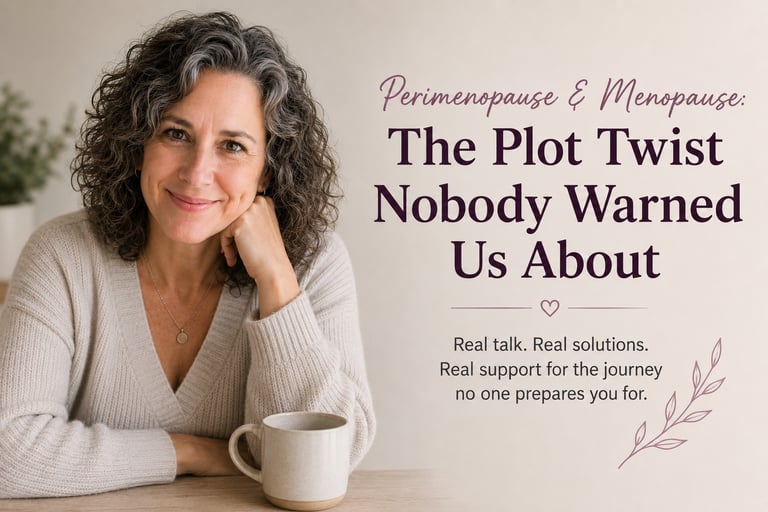
Perimenopause & Menopause: The Plot Twist Nobody Warned Us About
If life is a journey, perimenopause and menopause are that unexpected plot twist nobody saw coming.
You think you're cruising along on a scenic road trip. Then one day your body takes an exit you didn't approve, your hormones grab the steering wheel, and suddenly you wonder who changed all the rules.
One minute you're fine.
The next you're sweating through your shirt in the middle of winter, forgetting why you walked into a room, and crying over a dog food commercial.
If this sounds familiar, you're not alone.
Perimenopause: The Sneaky Warm-Up Act
Perimenopause is the transitional stage leading up to menopause. It often begins in a woman's 40s, though some women notice changes earlier and others later.
According to the North American Menopause Society, perimenopause can last anywhere from four to ten years.
Yes, years.
During this time, estrogen levels fluctuate unpredictably, creating a variety of symptoms that can seem completely unrelated.
You might notice:
Hot flashes and night sweats
Mood swings and irritability
Sleep disruptions
Brain fog and forgetfulness
Vaginal dryness
Changes in libido
Bladder urgency or leakage
Weight gain, especially around the middle
One day everything feels normal. The next day your body is doing the hormonal cha-cha with no rhythm whatsoever.
And here's the kicker: you can still get pregnant during perimenopause.
Just when you thought that chapter was closing, Mother Nature likes to keep things interesting.
My Personal Journey
My own road to menopause was anything but straightforward.
After years of heavy and unpredictable cycles, I had an IUD placed in my 30s that lasted a full decade. When it was finally removed - at my protest - my body responded with months of nonstop bleeding.
A second IUD attempt eventually led to the discovery of multiple fibroids and a uterus that had clearly decided to stop cooperating.
After another year of bleeding, I chose to have a hysterectomy at the age of 50.
I chose to keep my ovaries, hoping they weren't quite ready to retire and would keep showing up for work a little longer.
Instead, a few months later, menopause arrived like a freight train.
Hot flashes.
Mood swings.
Sleep issues.
Bladder surprises.
The whole package.
It turned out my ovaries had decided early retirement sounded pretty good.
With time, patience, and eventually some medical help, things settled down. But those early months were a confusing reminder that even when you've worked in healthcare, menopause can still catch you off guard.
Menopause: The Official Milestone
Menopause is officially diagnosed after you've gone 12 consecutive months without a menstrual period.
The average age of menopause is 51, although every woman's journey is different. Some women reach menopause earlier, while others spend years navigating the twists and turns of perimenopause before finally arriving thereto menopause.
At this stage, the ovaries significantly reduce estrogen production, and many symptoms either continue or evolve.
Research shows:
About 75% of women experience hot flashes.
Hot flashes may last 7–10 years or longer.
Bone loss accelerates after menopause.
Cardiovascular risk increases.
Vaginal and urinary symptoms become more common.
Up to half of women report joint pain during or after menopause.
For some women, symptoms improve over time.
For others, they linger like an unwelcome houseguest who forgot to leave.
Menopause After a Hysterectomy
One of the biggest misconceptions about hysterectomy is that it automatically causes menopause.
Not necessarily.
If the ovaries are left intact, they can continue producing hormones even though periods stop, since there's no longer a uterus to shed its lining each month.
The challenge is that without periods, you lose one of the biggest clues that menopause is approaching.
Hot flashes, sleep disturbances, mood changes, and other symptoms often become the only hints.
Research suggests women who keep their ovaries after hysterectomy may still experience menopause somewhat earlier than average due to reduced blood flow to the ovaries following surgery.
The important thing to remember is that your symptoms are real - even if you no longer have periods to track.
Why It Feels Like a Plot Twist
Menopause isn't just about hormones.
It's about identity.
It's about confidence.
It's about learning to trust a body that suddenly feels unfamiliar.
Many women wonder if they're falling apart. You aren't. You're adapting to a major biological transition.
In fact, studies estimate that up to 80% of women experience menopause symptoms, yet many never seek treatment or support.
That means millions of women are quietly wondering the same things you are.
What Can Help?
While there's no magic cure, there are plenty of tools that can make this transition easier.
Regular exercise
Good sleep habits
Stress management
Pelvic floor physical therapy
Balanced nutrition
Calcium and vitamin D for bone health
Omega-3 fatty acids
Hormone therapy when appropriate
Open conversations with healthcare providers
Support from other women experiencing the same journey
And yes, sometimes chocolate helps too.
The Bright Side
Here's the secret nobody told us:
Menopause isn't the end of anything. It's the beginning of a new season.
A season filled with wisdom, resilience, self-awareness, and a little less concern about what everyone else thinks.
You may have fewer hormones, but you've gained decades of experience.
That's a trade I'll take.
Final Thoughts
Perimenopause and menopause can feel overwhelming, confusing, frustrating, and sometimes downright unfair.
But they are also normal parts of life. You aren't broken. You aren't losing your mind. And you certainly aren't alone.
Millions of women are walking this same path - learning, adapting, laughing, crying, sweating, and ultimately discovering they are stronger than they ever realized.
So, grab a fan, give yourself some grace, and remember:
This chapter may be different, but it still belongs to you.
And together, we'll figure it out one hot flash at a time.
⚕️ Medical Disclaimer: This blog is for educational purposes only and should not be considered medical advice. Always consult your healthcare provider regarding questions about menopause, hormone therapy, or your individual health needs.
Navigating Life after 50
Real Talk, Real Life, and Menopause Unfiltered.
Contact
Newsletter
Hello@navigatingmenopauseafter50.com
© 2026. All rights reserved.
⚠️ Medical Disclaimer: This blog is for informational purposes only and is not a substitute for professional medical advice, diagnosis, or treatment. Always consult your healthcare provider regarding your individual symptoms and health needs.